Gorilla Trekking in Rwanda: My Journey Through One of Africa’s Most Captivating Countries
Gorilla trekking in Rwanda is an extraordinary travel experience. I share my journey beyond the jungle and offer top tips to explore this fascinating country.
As I sat in a consultant’s waiting room, I couldn’t shake the feeling that the trip that had been at the top of my bucket list for the last twenty years might be slipping away. An MRI on my spine revealed a bulging disc and a small fissure, but I had waited two decades to fulfil this dream, and nothing was going to stop me from gorilla trekking in Rwanda in 10 days time.
My first safari experience was on our honeymoon in South Africa, and I was immediately hooked. Incredible adventures in Tanzania and Kenya followed a few years later, and I soon became fascinated with seeing the critically endangered mountain gorillas that live only in the Congo Basin.
Fortunately, my friend Maura shared my dream, so we decided to book a trip to Rwanda to celebrate milestone birthdays. Travel Counsellor Katrina McMullan organised everything seamlessly, from our flights and hotel stays in Kigali and Volcanoes National Park, to our amazing guide Bram, who was with us from the moment we arrived in Kigali until we left a week later.
I kept Katrina abreast of my back issue and she got in touch with her local team in Rwanda. When we arrived I had lengthy conversations with Bram about different trek options.
We were told there were easy, mid and hard gorilla treks. Some gorilla families prefer higher altitudes and are harder to reach, while others prefer to stay on the lower plains. We requested the medium option and hoped for the best!
Gorilla families may decide to settle in one location for a few hours, or they may move – this is all part of the experience, and what makes gorilla tracking so authentic. It can take anything from one to four hours to find mountain gorillas, so requests can never be guaranteed.
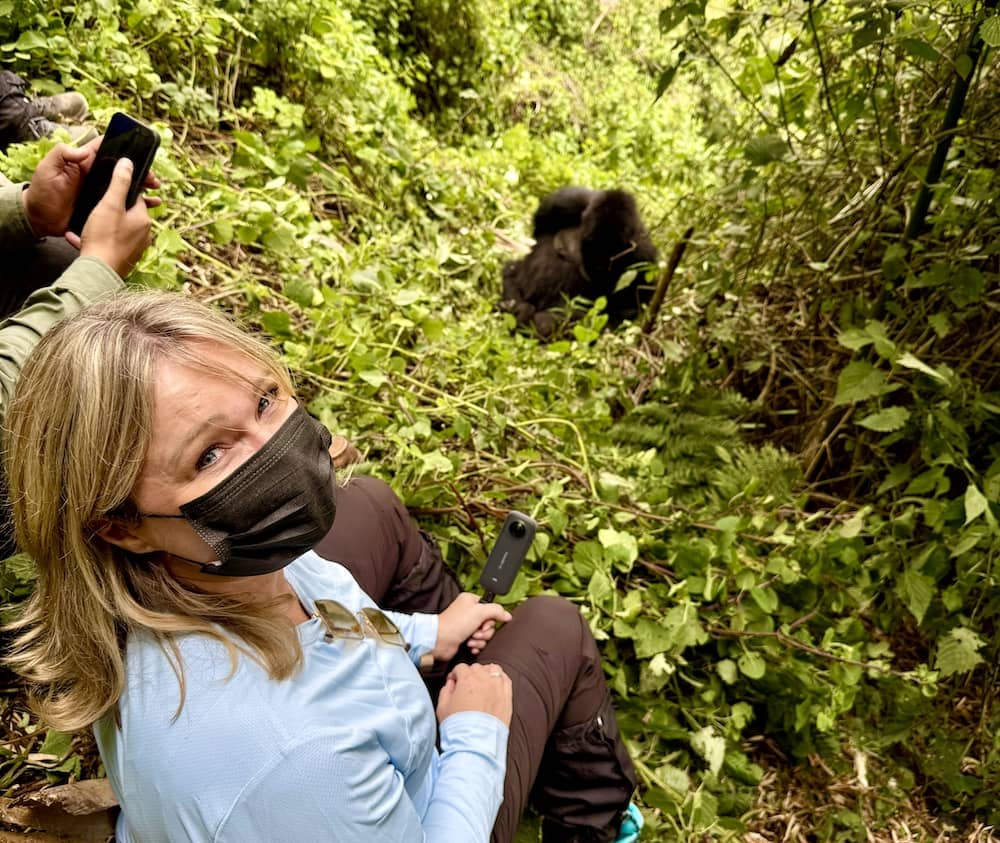
There are 24 habituated mountain gorilla families in Rwanda, but only 14 families (increased from 10 families in 2022) can be visited by the public. Strict one-hour visits by a maximum of 8 people are allocated to each family, so early booking is essential.
Each family has at least one Silverback and several females, as well as youngsters and babies. Once you are over 15 and have a reasonable level of fitness, you should feel confident gorilla trekking, and you have a 99% success rate of seeing them.
The Gorilla Trek
I don’t think I had ever been so excited to hear a 5am alarm call. We dressed quickly, enjoyed a light breakfast and got fitted for gaiters by the wonderful staff at the Virunga Inn Resort & Spa.
The right clothing is important when gorilla trekking as weather can change at any time at the higher altitude in the Virunga mountains. Gaiters are not only important to prevent mud and water from entering your boots, but they also keep the pesky red ants at bay.
Bram collected us at 6am and brought us for a briefing on gorilla behaviour and safety guidelines, and to meet our guide and porters. Once we were assigned to a particular group, we took a quick drive to Gorilla Guardians Village, the starting point of the trek. We could hardly contain our excitement!
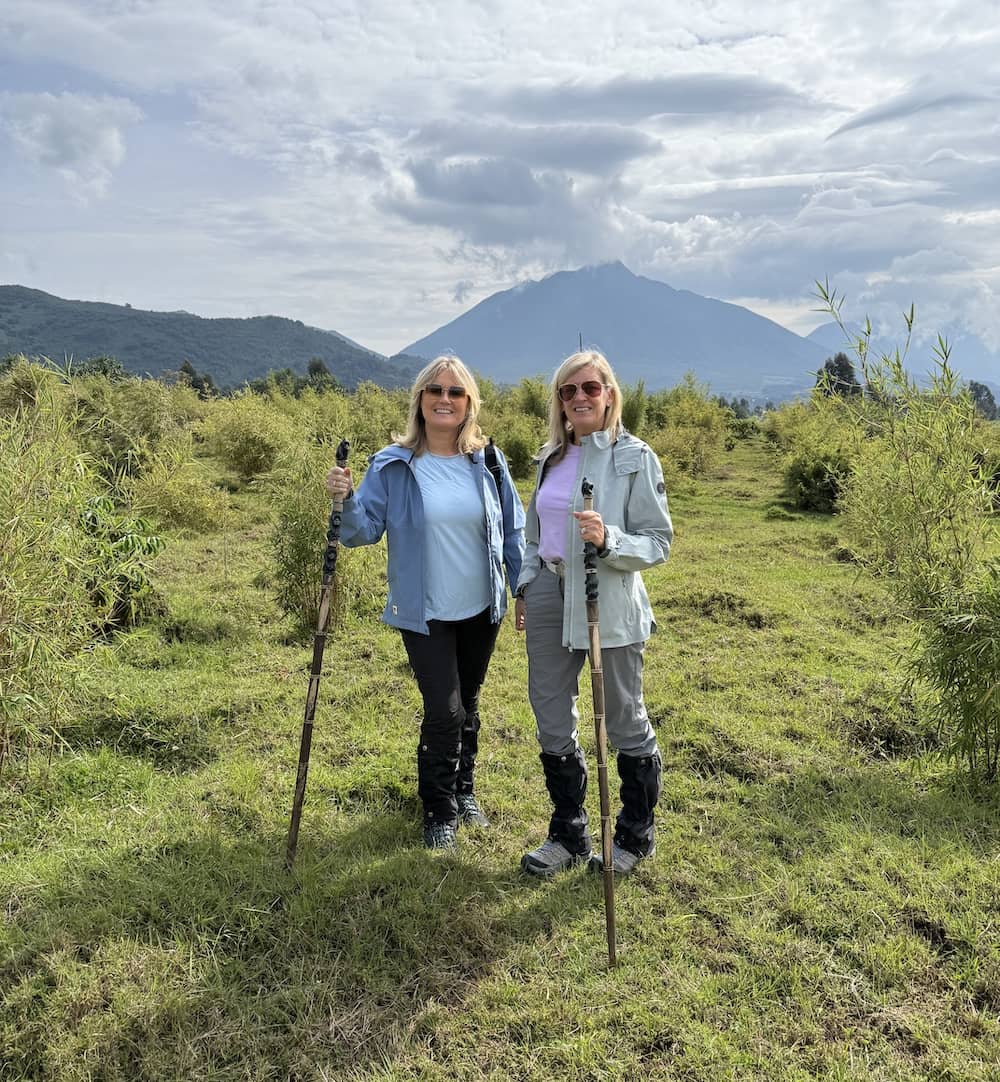
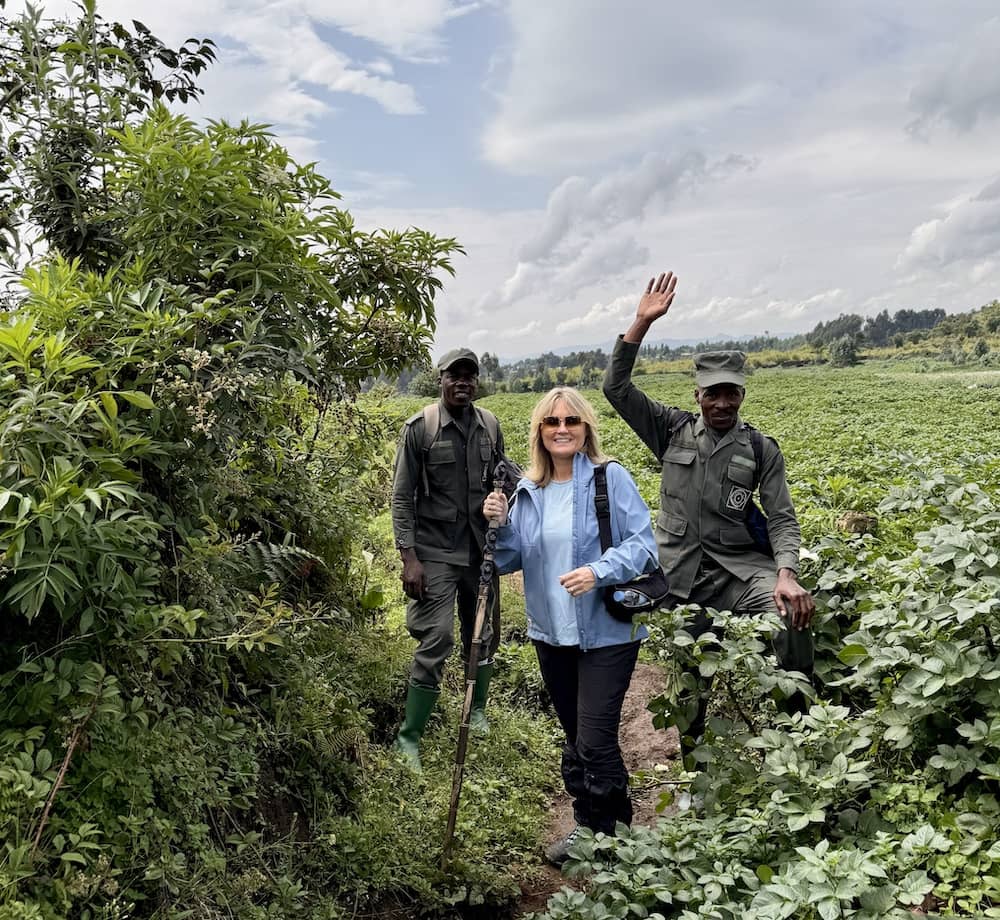
Our group set off at 8am. The sun was shining, the mountains majestic and my back was holding up nicely – it was the perfect start!
Our trek began with a pleasant walk through lush fields for about 30 minutes. Volcanoes National Park’s dramatic landscape of steep mountains, enchanting rice terraces and misty rainforests are a hikers dream.
We chatted to the other group members as we walked and they told us that they had been on a difficult trek the day before (many people book 2 or 3 treks), and they were looking forward to what they were told should be an easy trek today.
We were going to see the Sabyinyo gorilla family who are usually one of the easiest families to track, as they tend to live on the lower slopes of the Sabyinyo Mountain.
Myself and Maura tried our best to hide our disappointment. While I was conscious of my sore back, I had waited for this moment for 20 years, I didn’t want to see the mountain gorillas after a short walk…
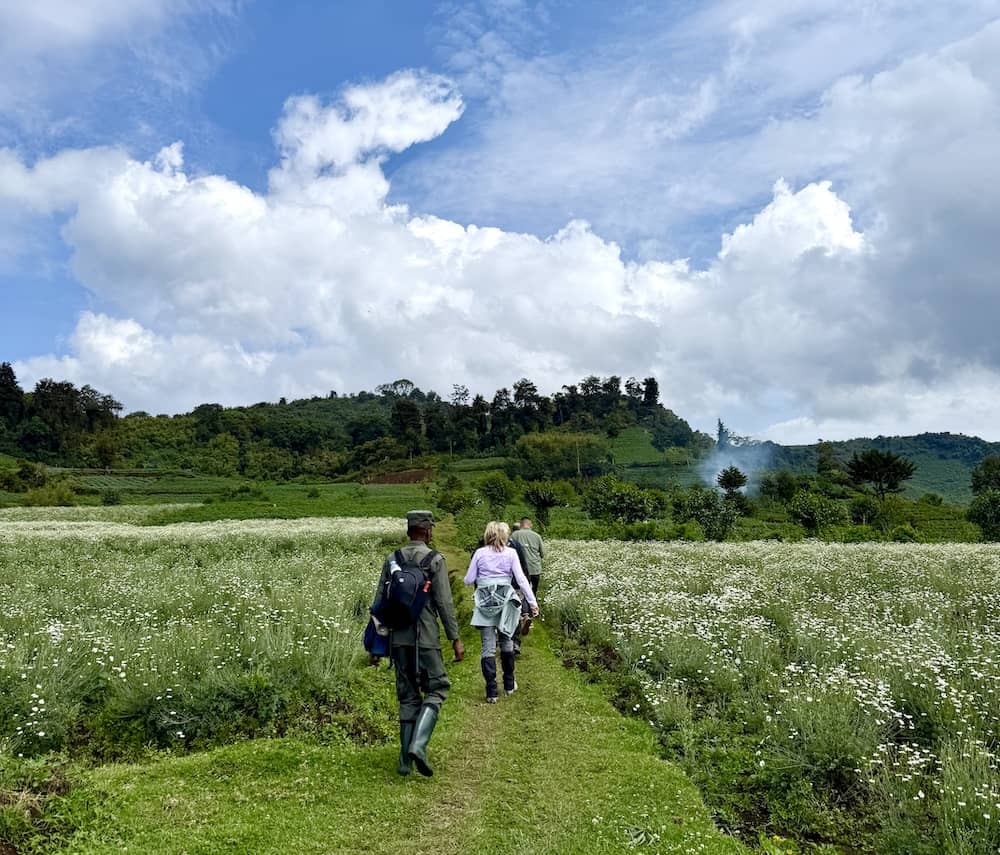
We continued a little further up the Sabyinyo mountain, when Paula, a lady in our group, began to suffer from altitude sickness and needed to rest. Patience, our aptly named guide, encouraged her to keep going and we agreed to take regular breaks to assist her.
While I thought this was very admiral, it was also partly because there was only one tracker with a gun in our group, and with herds of unfriendly buffalo nearby, it wasn’t feasible for someone to return to base alone.
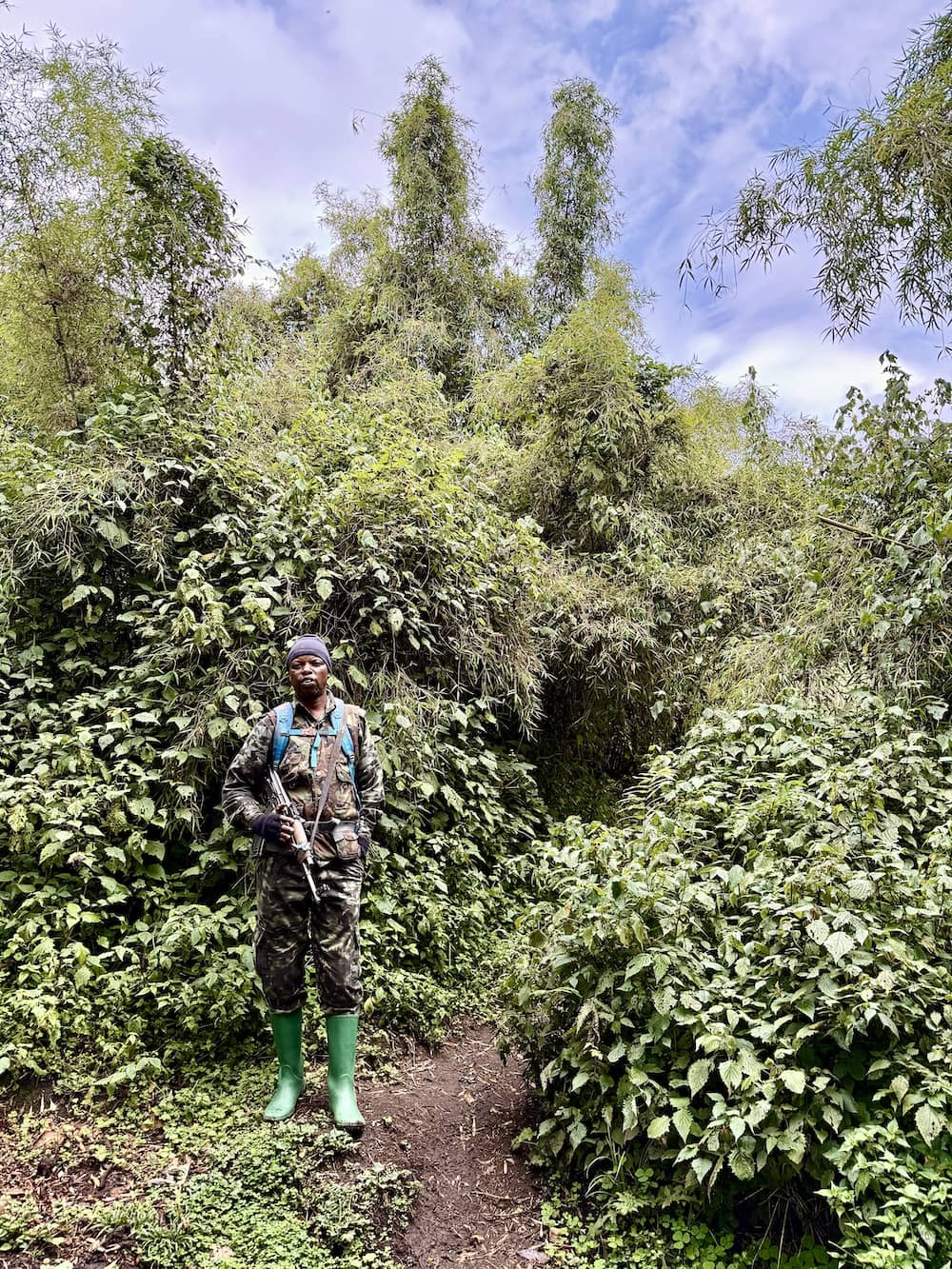
When we arrived at the edge of the rainforest, the terrain and elevation changed dramatically. The lush green fields were behind us, the ground was muddy and slippy, and the trackers used machetes to hack through the dense jungle as we walked.
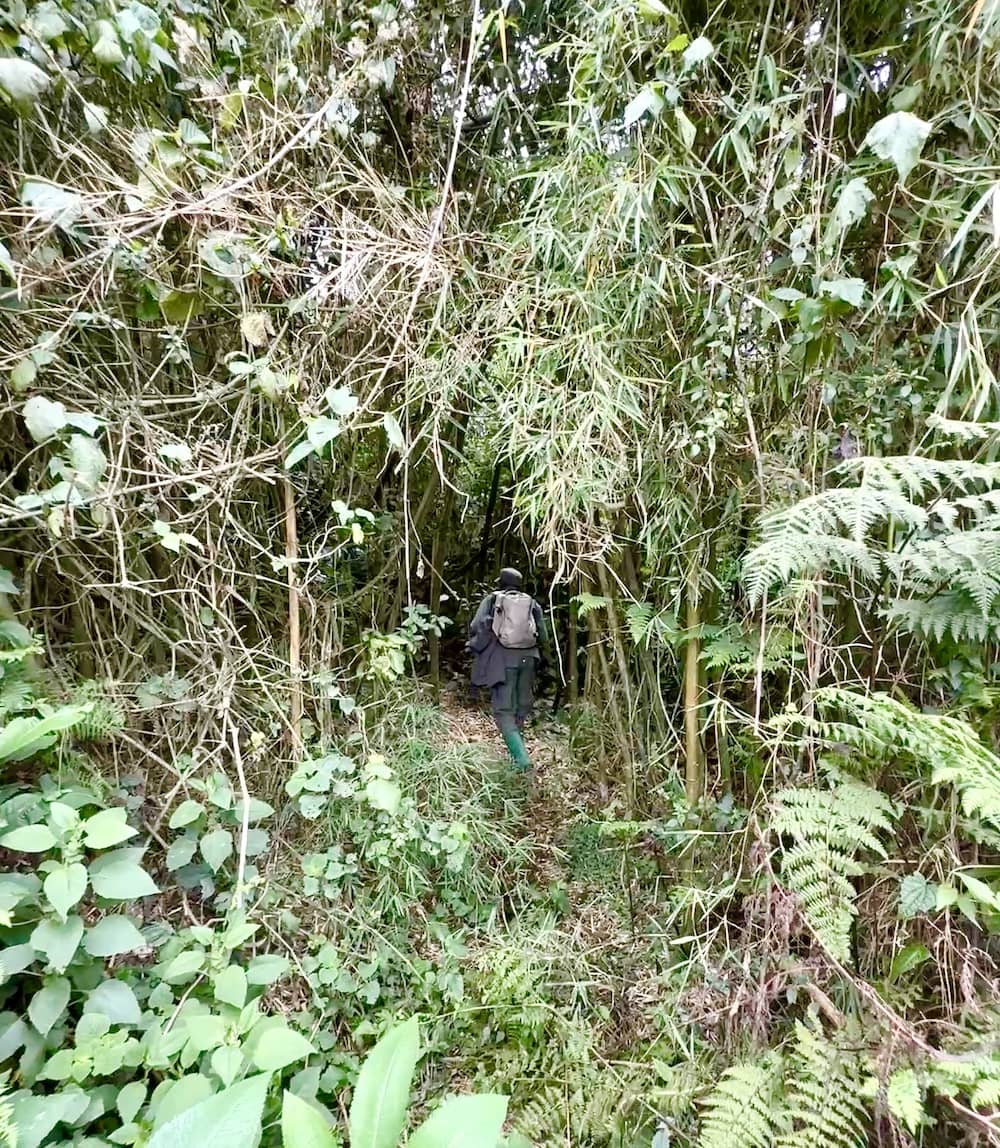
We paused on a few occasions to allow Paula to rest, and we were assured that we would get to the gorillas’ location soon. We continued trekking through a labyrinth of tangled vines, when suddenly the chatter between the trackers intensified. Something didn’t feel right. My first instinct was that there were buffalo nearby. In fact, the trackers had lost the gorillas.
Mountain gorillas are not microchipped, therefore trackers need to track them manually. What started as a relatively easy trek, turned into a full-scale jungle adventure!
We climbed up the side of mountains, slid down mucky valleys, walked on steep ledges, got caught in briars, and held onto thorny branches with what felt like dear life at times.
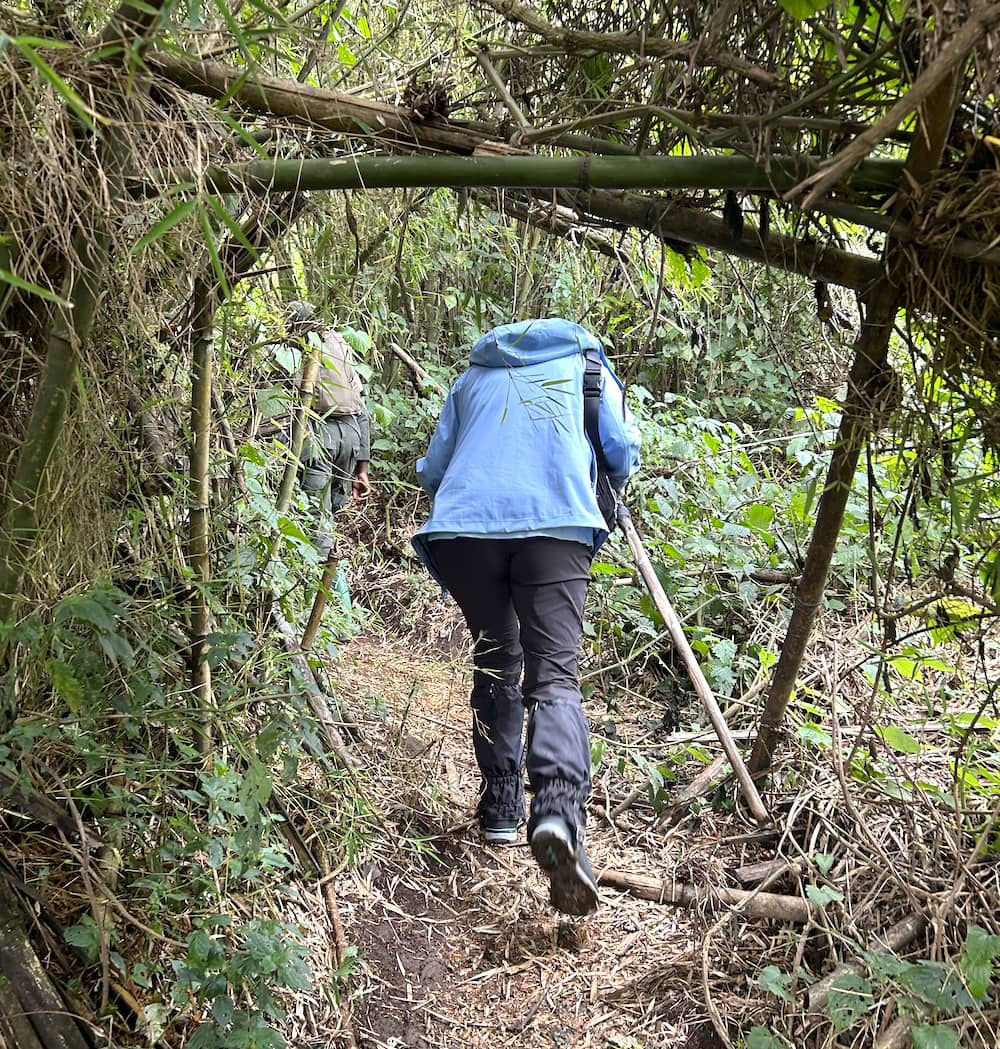
The trackers got excited when they found fresh gorilla dung or freshly made pathways through the jungle – it was hard to believe we were tracking mountain gorillas in this way!
After about an hour it became clear that we were getting close. Our guide Patience stopped suddenly. He told us all to put on masks and our porters were ordered to stay behind. The excitement was palpable.
Within minutes, we spotted two young mountain gorillas. We were told to keep walking quietly and not to stop. The youngsters were within touching distance; it pained me to walk past them! With no porters to assist us, we had to trek onwards.
We held each other’s hands and grabbed onto the strongest branches we could find in search of the gorilla family. The adrenaline took over, my bulging disc was a distant memory.
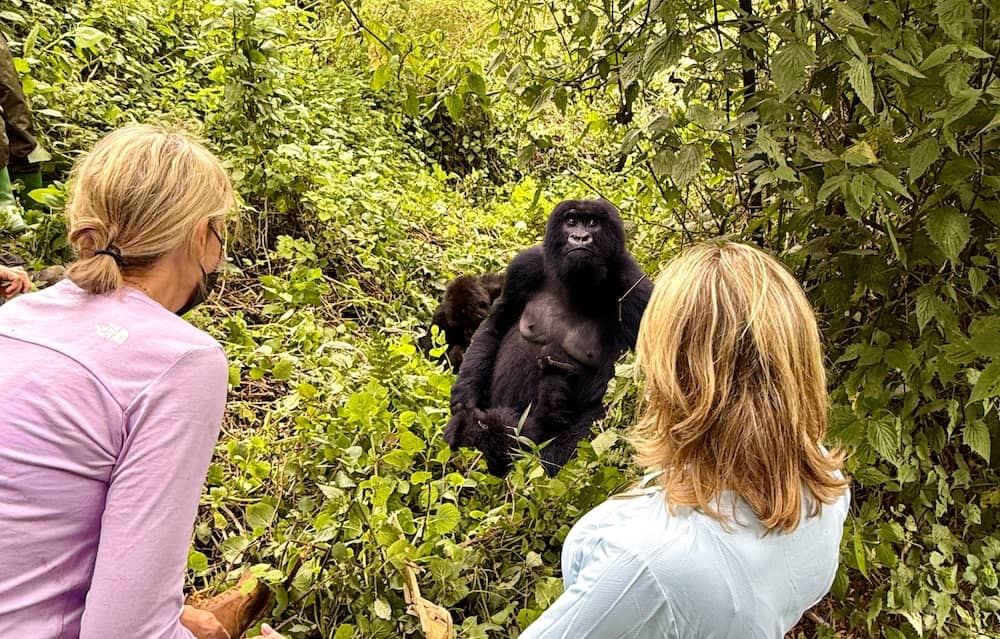
It was surreal when I finally laid eyes on Casanova, the Silverback whose nickname derived from his ability to father many babies from different mothers. He stared right into my eyes with complete ease, he could see I carried no threat to him.
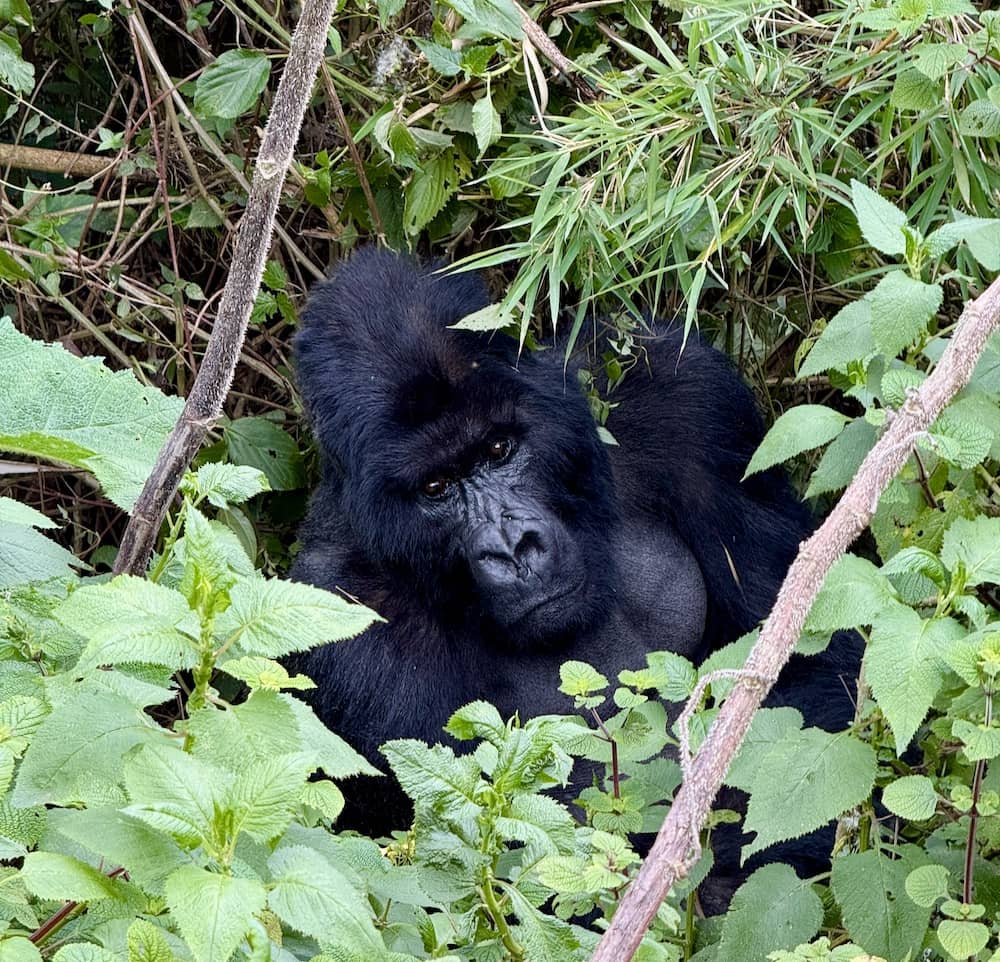
As much as I had thought about this moment, I didn’t expect it to feel so serene. A massive Silverback was within 10 feet of me, yet bizarrely I felt relaxed. I envisaged seeing gorillas at a distance, moving at pace, and I expected to feel nervous. Contrarily, I heard jungle sounds of birds chirping and cicadas buzzing as I watched Casanova, the whole experience was remarkably peaceful.
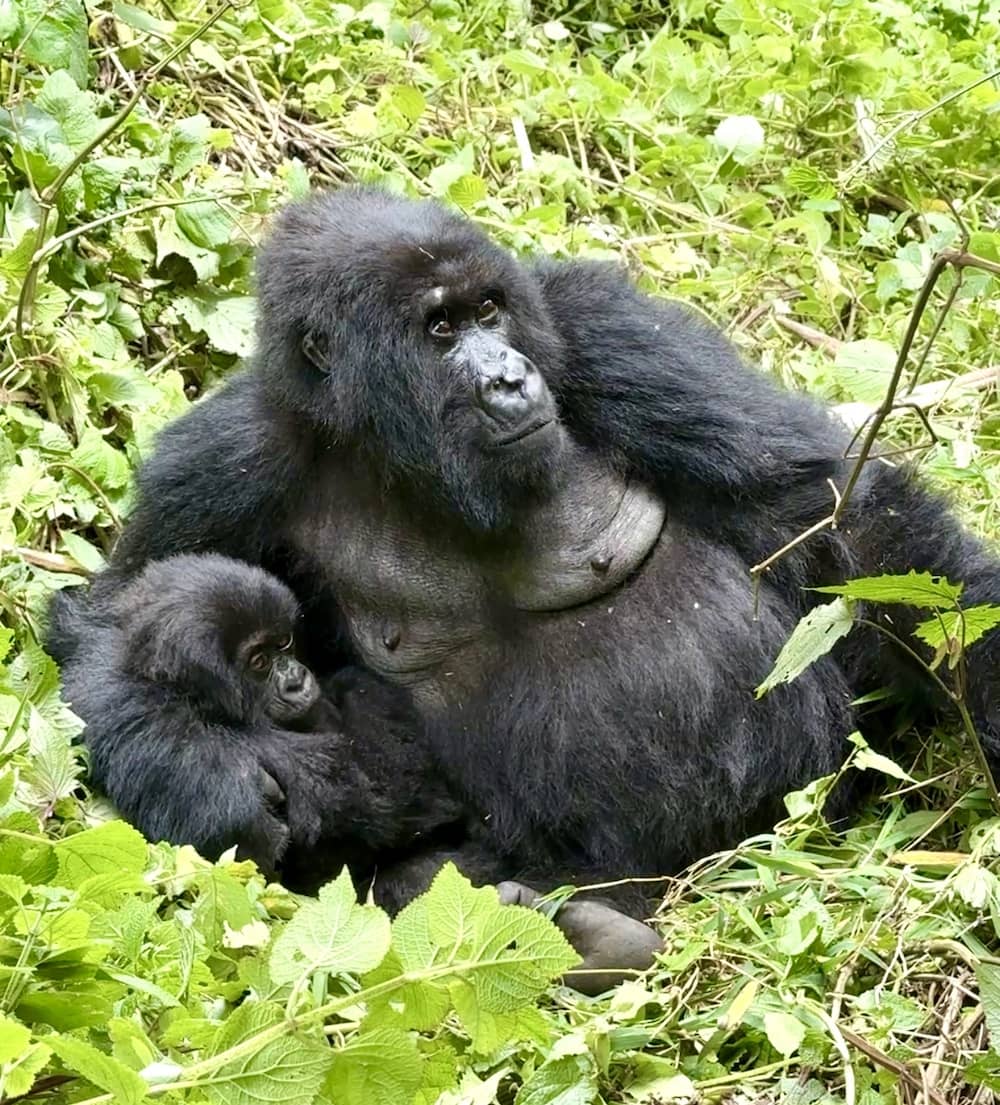
We stayed watching the Silverback for about 15 minutes before moving to visit one of his many females and a young baby. I sat down on the side of the mountain and watched them in awe.
The mother lay on her back and played with her newborn, before showering her with cuddles and kisses for what must have been about 20 minutes. We share 98.3% of our DNA with mountain gorillas, and it was beautiful to watch this mother act as we do with our own children.
I thought back to Dian Fossey and the extraordinary conservation work she started over 40 years ago. There were only 250 mountain gorillas in the world at that time, there are now over 1063. I remember watching the movie Gorillas in the Mist many years ago, and it was hard to believe I was in the National Park where Dian lived, watching gorillas as she did. We would not have been there without Dian; her legacy will continue forever.
Mountain gorillas are the only wild apes in the world whose numbers are increasing, and their location in the second-largest tropical rainforest on earth means they play a critical role in the fight against climate change.
By protecting these mountain gorillas we are helping to protect vital plants and animals within this rainforest. As someone working in a travel industry that is constantly reminded about the threats of over-tourism, this was responsible tourism at its very best.
Casanova let out a few grunts and roars every so often and Patience expected him to charge past us, but it never happened. He simply walked away proudly showing us his silver back. It was one of those profound moments that I will never forget.
Our 60 minutes came to an end and it was time to leave these incredible primates. We quickly trekked down Sabyinyo mountain, and myself and Maura chatted incessantly about what we had just witnessed.
It was hard to believe this adventure that I thought about for so long was over. Or perhaps it was just the beginning? We agreed it’s never too late to start living our bucket list…
Read: 25 bucket list holidays from around the world
About Mountain Gorillas
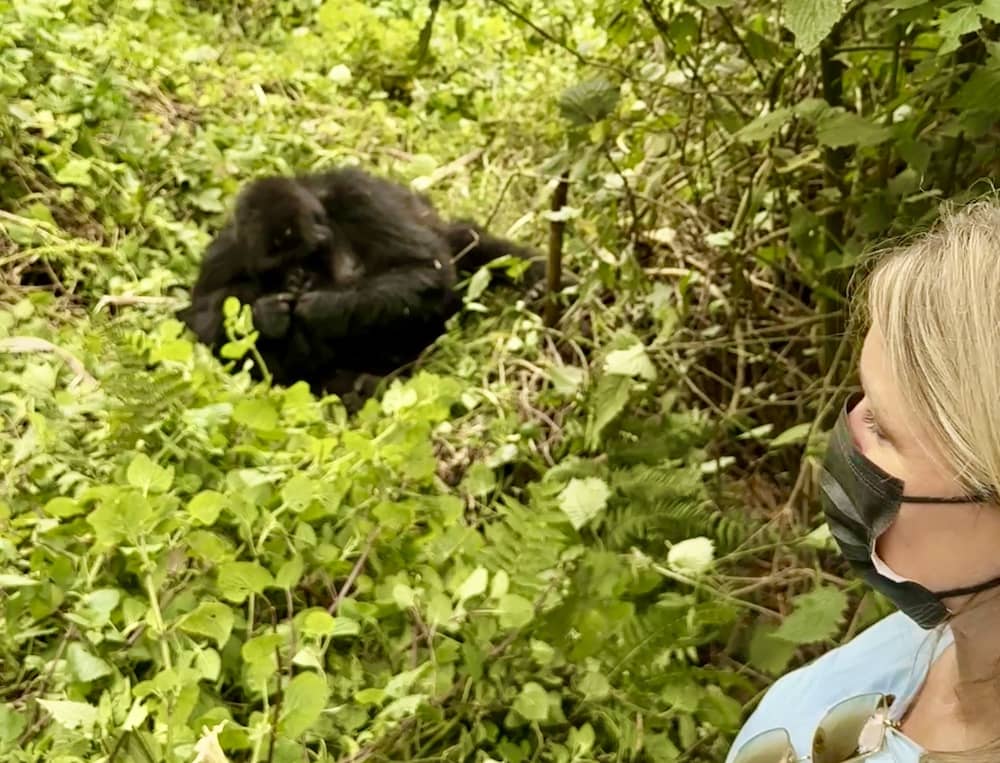
Mountain gorillas are the world’s largest living primates, and we share 98.3% of our DNA with them. There are only 1063 mountain gorillas in the world and they are nestled in the rainforests between Rwanda, Uganda, and the Democratic Republic of the Congo. 600 of these mountain gorillas are in Rwanda.
Why Choose Gorilla Trekking in Rwanda Vs Uganda
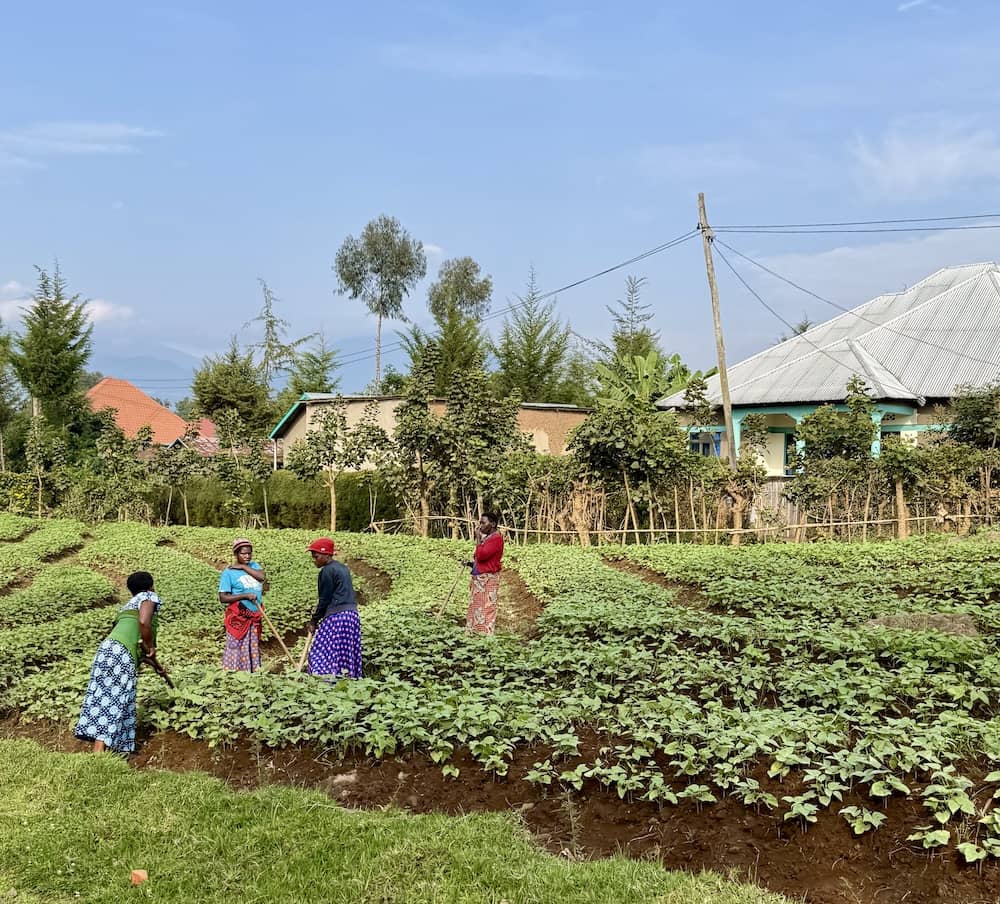
Many asked why I chose to see the gorillas in Rwanda instead of Uganda. Trekking with gorillas in Uganda is less expensive as permit prices are lower, however, as this was a once-in-a-lifetime opportunity, I wanted to make sure I had the best possible experience. These were just some of the reasons that helped me make my decision:
- The drive time to see Rwanda gorillas in Volcanoes National Park is only 2.5 hours from Kigali. The drive time from Entebbe or Kigali to see Uganda gorillas in Bwindi National Park is 8 hours.
- Rwanda has many luxury lodges close to gorilla trekking locations
- Rwanda is considered an easier place to trek – the terrain is less dense and shorter trekking times are available.
- Rwanda has a fascinating history that I was eager to learn about.
- Rwanda is the cleanest and safest country in Africa.
- It is an offence punishable by death to be a member of the LGBTQ community in Uganda.
Fascinating Facts About Rwanda
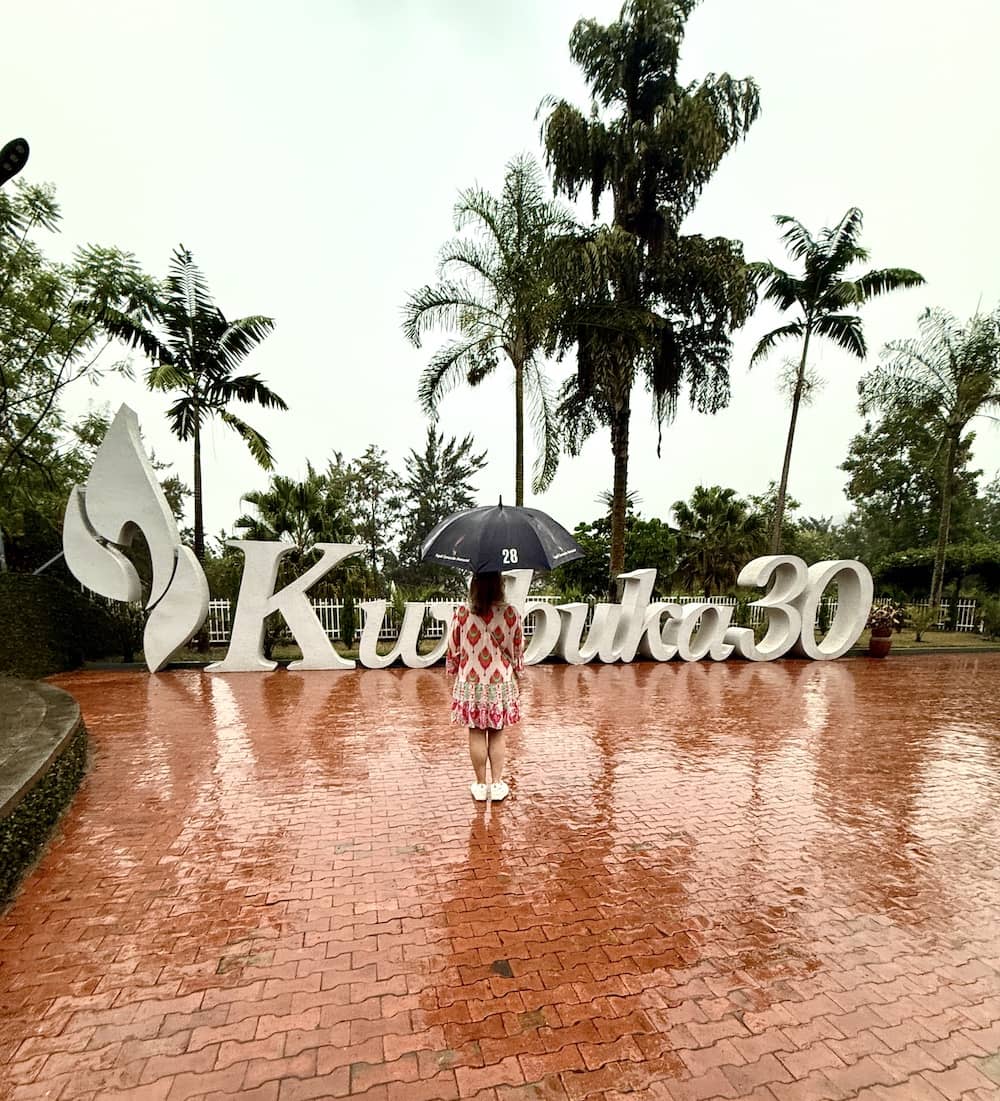
Rwanda is a fascinating country. It is an example to the world how a country can transform under the right leadership. To think that only 30 years ago the Genocide in Rwanda killed 1 million people. 2 million refugees were displaced and there were 300,000 orphans, all in 3 months. What surprised me most was how forgiving the Rwandese people are.
President Paul Kagame has made remarkable decisions to help Rwanda to be the cleanest and safest country in Africa today.
In 2008, Rwanda introduced the ban of single-use plastic bags, which has been expanded to include other singe-use plastic products. A US$60 fine for carrying a single-use plastic bag was introduced and any littering results in an on-the-spot fine.
In tandem with this, Umuganda was introduced in 2009. This is a national holiday that takes place on the last Saturday of every month for mandatory nationwide community service from 8 am – 11 am. Participation in Umuganda is required by law, even the President takes part. Rwanda’s streets are spotless as a result.
I couldn’t help but notice that most locals get around Kigali by motorbike, and more importantly that everyone wears helmets – you will be fined if you don’t wear one. I can see why crime levels are so low here, and how it has become one of the safest countries in Africa.
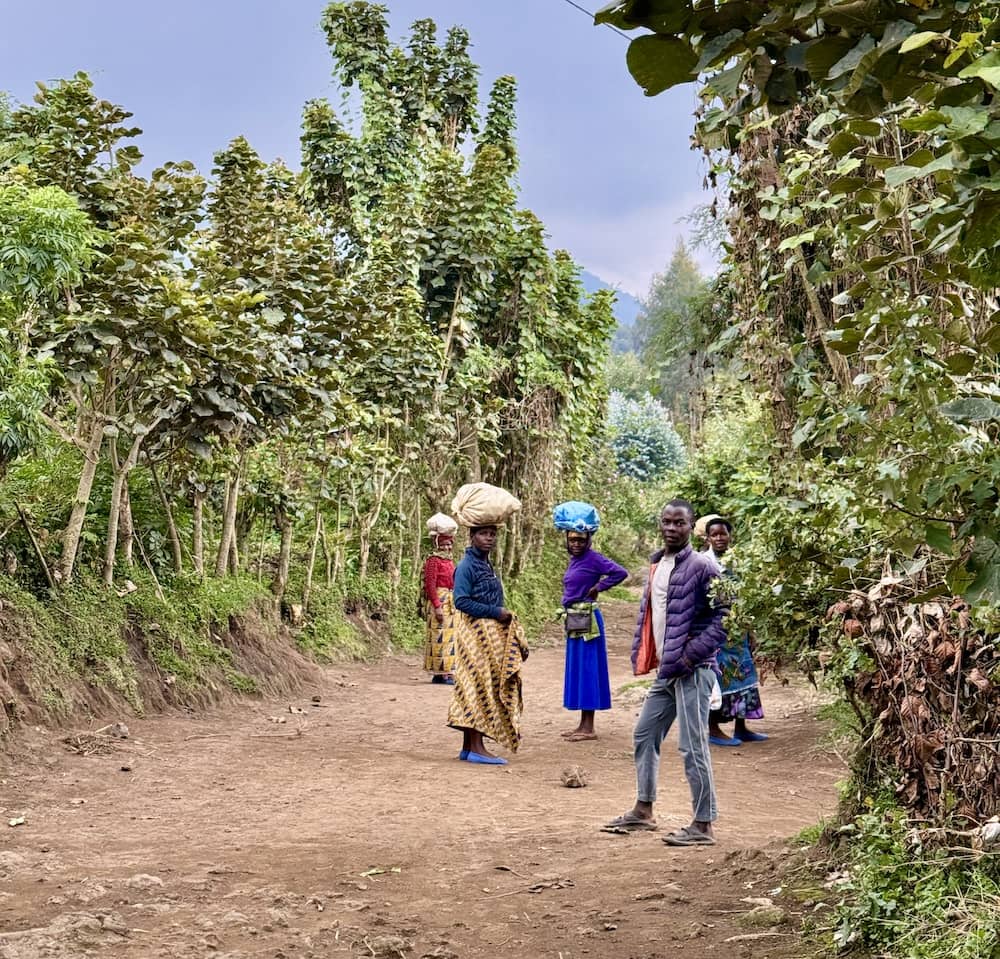
Another remarkable statistic is that there are proportionally more women in power in Rwanda than any other country in the world. Rwanda is the first country in the world with a female majority in parliament, with 63.75 % in the Chamber of Deputies and 53.8% in the Senate.
The Perfect 7 Day Rwanda Itinerary: Things To Do in Rwanda Besides Gorilla Trekking
There are many things to do in Rwanda besides gorilla trekking so make sure you allow plenty of time to explore this fascinating country.
I suggest staying at least one night in Kigali where you should take a city tour and see the Genocide Memorial.
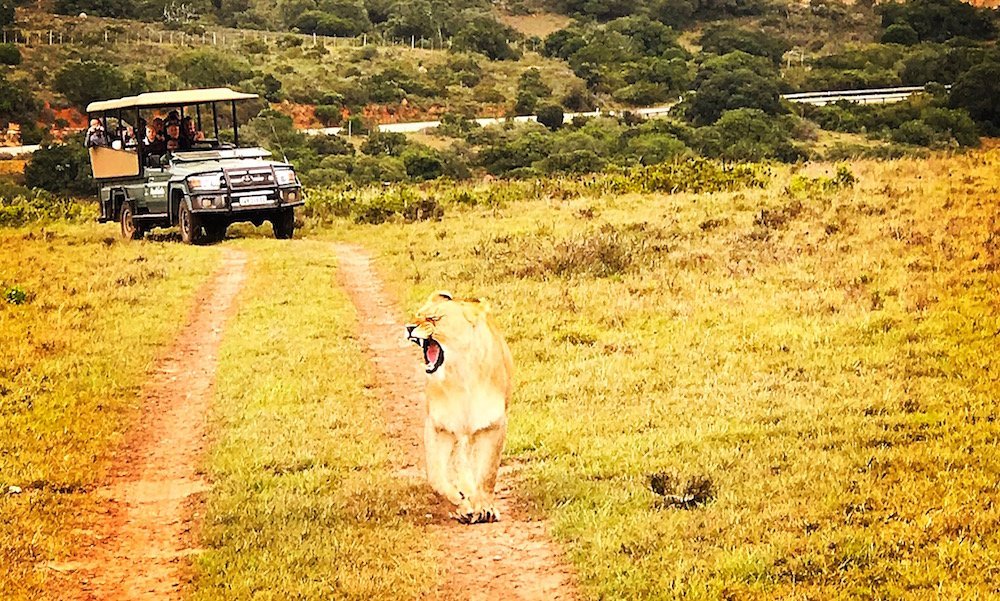
A two-night trip to Akagera National Park to see the Big 5 should also be considered. Stay onsite and enjoy game drives, before making your way to Volcanoes National park for gorilla trekking.
Top Tip: Drive during the day, the scenery is stunning and ask your driver to prebook somewhere local for lunch.
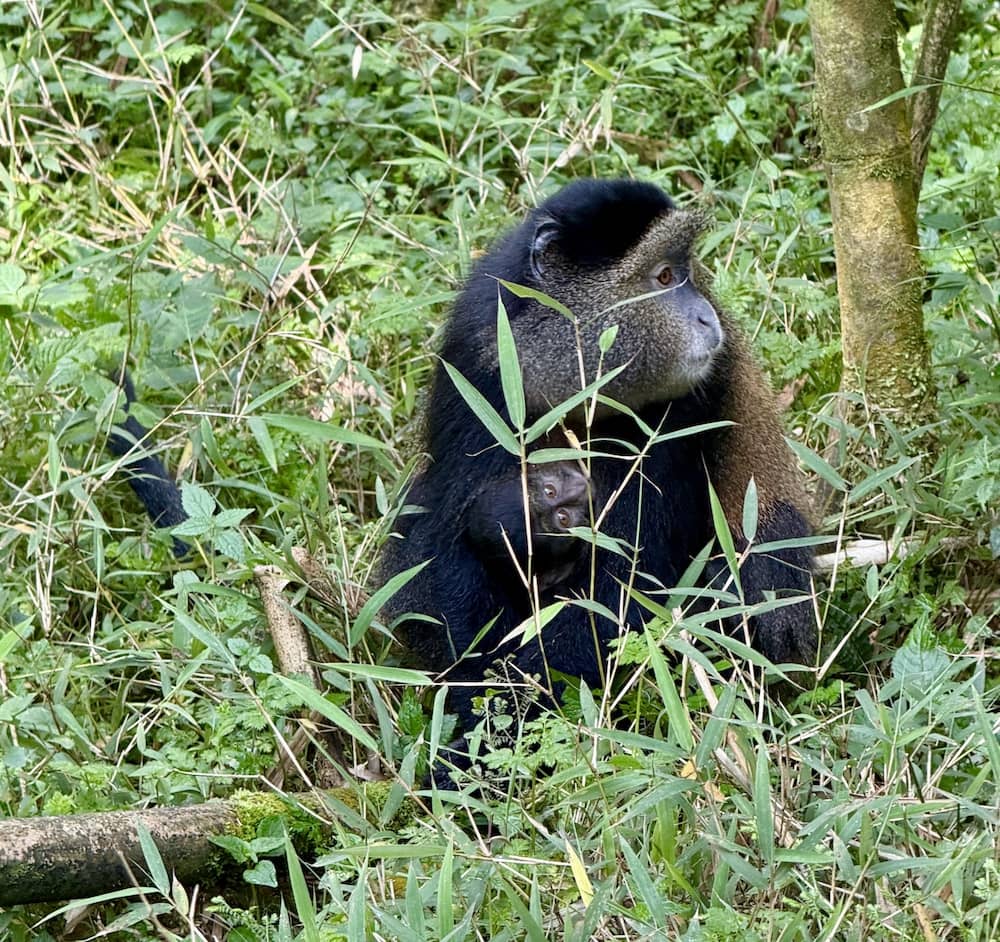
When you reach Volcanoes National Park I recommend doing a Golden Monkey Trek on your first day. This easy trek will help you acclimatise to the location before your gorilla trek, as well as giving you one hour to spend with the endangered animals that are only found in the Virunga Mountains.
Book your gorilla trek for the following day and leave yourself some time to visit the Ellen de Generes Campus of the Dian Fossey Gorilla Fund. You will learn interesting facts and life stories about mountain gorillas as well has getting the opportunity to shop for locally made products in the gift shop.
If your budget allows, you could book two gorilla treks – as no two treks are the same!
How to book gorilla trekking holidays:
Bucket list holidays such as gorilla trekking tours should not be left to chance. Make sure you book with a reputable travel agent that offers 24/7 support, and one who can tailor-make the perfect Rwanda holiday itinerary to suit your needs.
I highly recommend Travel Counsellors. Our trip was planned perfectly from start to finish, and our hotels and guide were outstanding. We travelled with Qatar Airways via Doha and Travel Counsellors booked a stopover for us on our return journey – it was the perfect place to relax in the sunshine after our active time in Rwanda.
Price including flights, hotels and activities in Rwanda, plus a three night stay in Doha is available from €5825 per person – see more details here.
Price including flights, hotels activities in Rwanda including Big 5 safari, plus a two-night stay in Doha is available from €7390 per person – see more details here.
What to Wear Gorilla Trekking in Rwanda
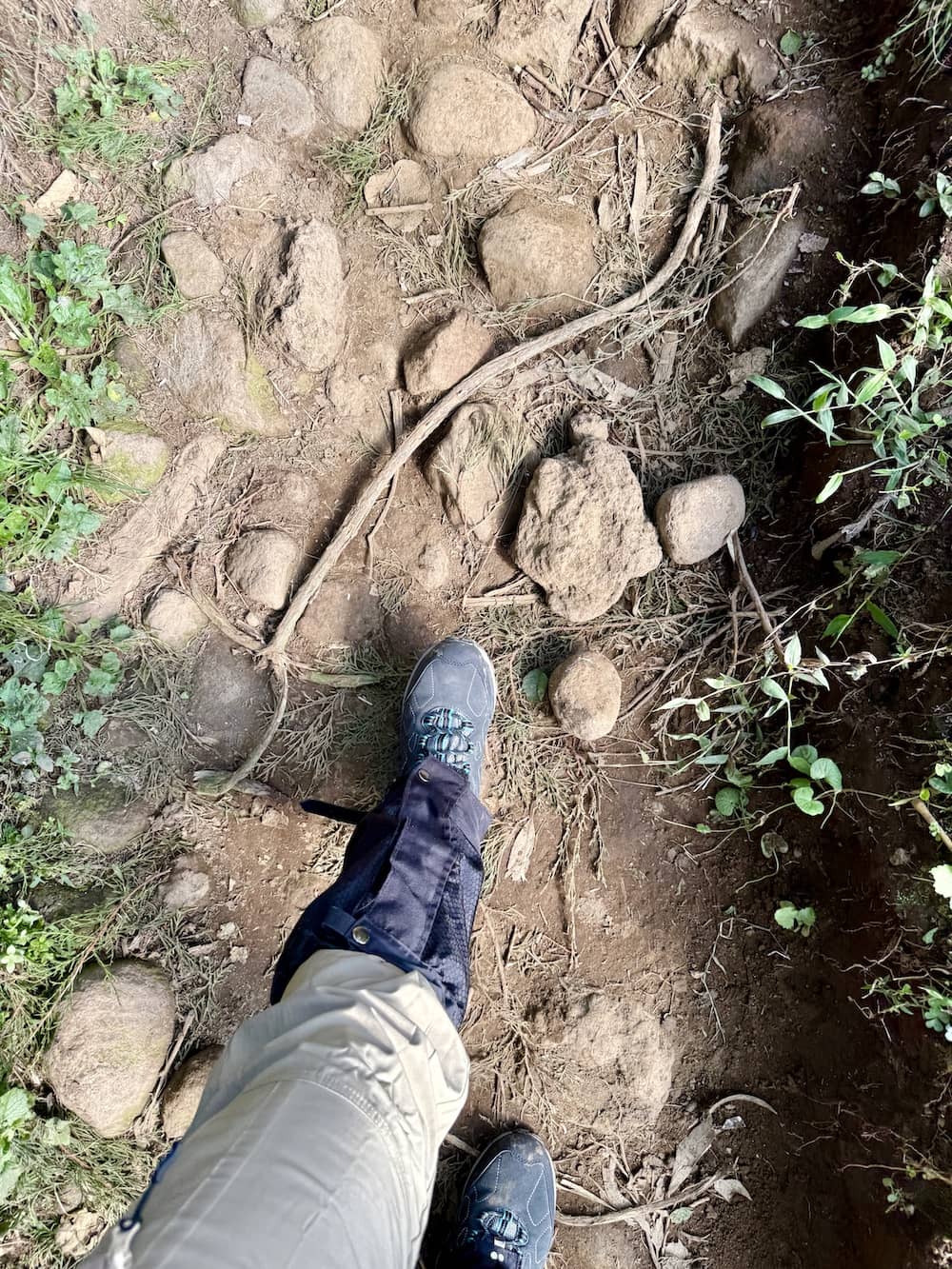
You need to be prepared for all weather, so layers are best. Wear waterproof lightweight trousers, a lightweight, long-sleeved top and a rain jacket.
Waterproof hiking boots with thick socks are essential, as are gaiters to keep out red ants. Our hotel supplied these free of charge so check this with your hotel before you travel.
Rwanda Gorilla Trekking Packing List
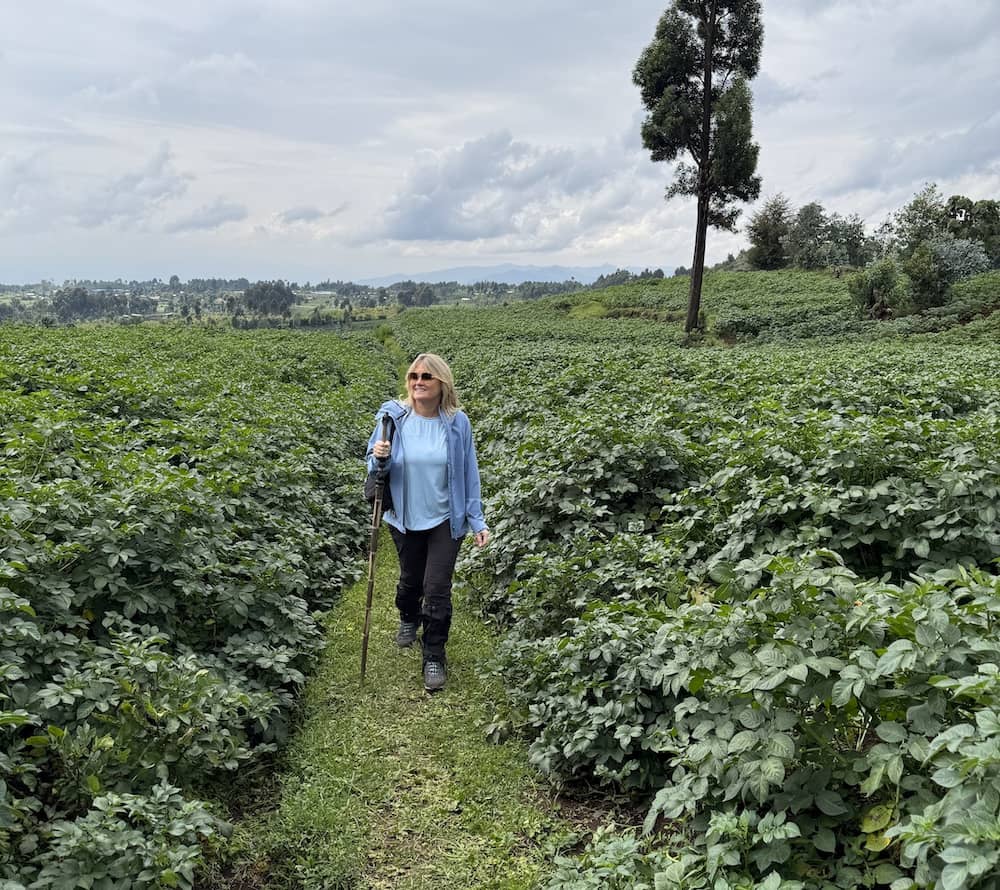
Wondering what to pack gorilla trekking, and how you are going to carry everything, is a common question – I had the same concerns. However, there is no need to worry. Porters are available (and necessary) to carry your backpack, and offer a helping hand when climbing. Porters income is valuable, they are only too happy to carry your backpack. Trust me, your porter will be the cheapest but most valuable part of your trek.
With this in mind, you shouldn’t have to worry about brining extra supplies. Remember you need to prepare for all weather, I suggest you pack the following in your backpack:
- A warm sweater
- Gardening or heavy duty gloves ( these are important for thorny branches)
- Hat
- Plenty of water
- Light snacks or packed lunch
- Sunscreen
- Insect repellent
- Camera
- Cash for tipping porters, guides and trackers
The Best Time of Year to go Gorilla Trekking in Rwanda
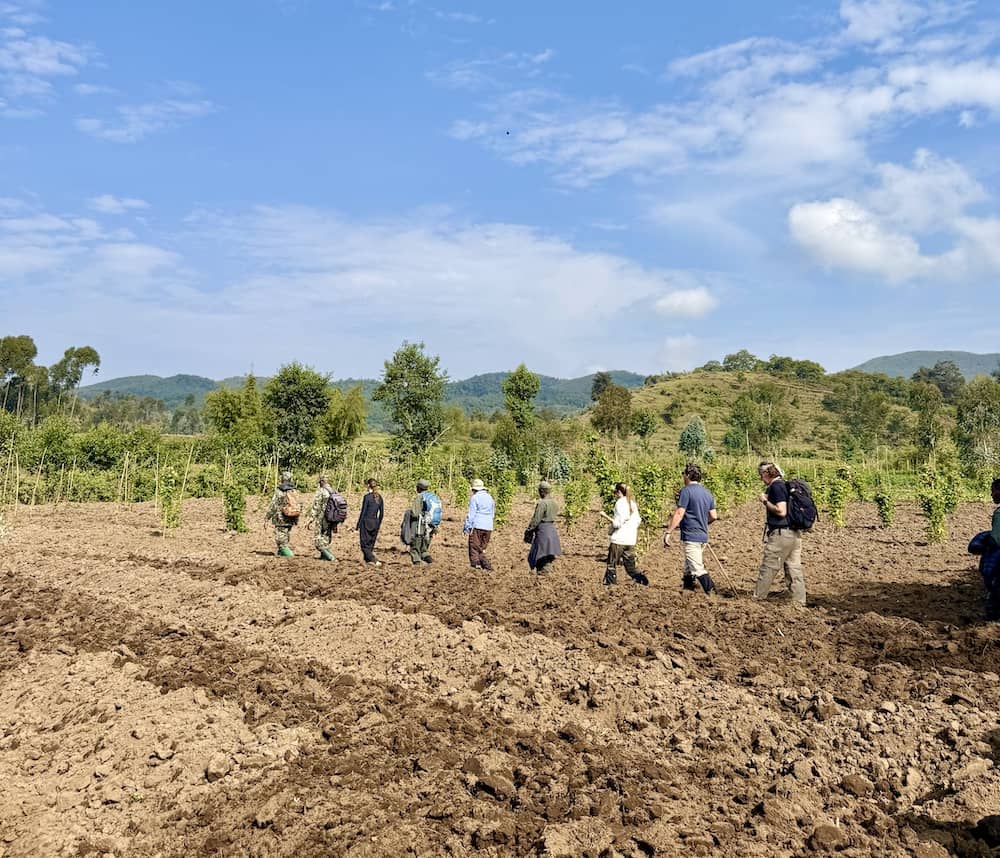
Gorilla safaris are possible all year-round, but in order to try to avoid the heavy rains, it is best to visit during the dry season from June to September or December to February. However, be prepared for rain at any time of year. We visited in early October and had a balmy morning for our trek, but there was hail and heavy storms the previous day.
How Much is Gorilla Trekking Permit in Rwanda
The cost of gorilla trekking permit in Rwanda is $1500 per person which covers the cost of park facilities, rangers and guides, and ensures the sustainability of conservation initiatives. 10% off all permit fees are invested in the local communities including upgrades to infrastructure and other community development initiatives.
These fees are usually built into gorilla trekking tours but always check with your travel agent.
I hope my guide to gorilla trekking in Rwanda will help you plan this trip of a lifetime soon. While every effort was made to ensure accuracy, prices and descriptions are subject to change.